
How to Become a Pet Influencer: The Honest Guide
How to become a pet influencer in 2026: pick a niche, grow an account, and get paid. The whole system from someone doing it, with the boring parts left in.

Most guides on how to become a pet influencer are written by people who have never done it. They tell you to “post consistently” and “be authentic,” which is a bit like telling someone the way to get rich is to have more money.
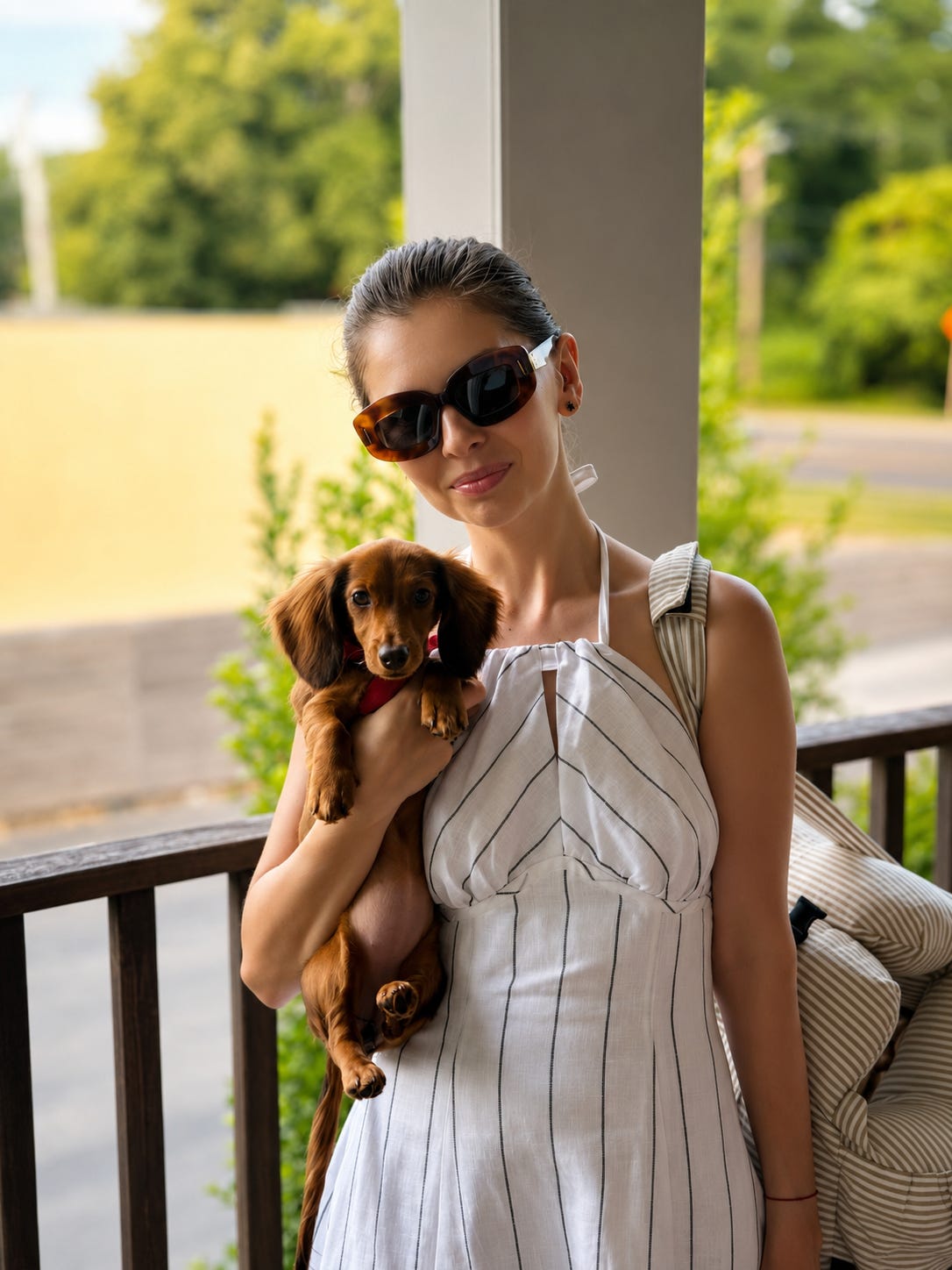
This one is different in one specific way: I actually did it, and I wrote down what happened. My two miniature dachshunds, Nicole and Nora, have about 73k followers across three platforms, built over roughly a year. I made most of the available mistakes on the way, several of them twice.
This page is the map. Each section is the short version, and links to the full breakdown if you want it.
Real talk: the numbers below show what’s possible, not what’s promised. They’re an example of the upside this can create — yours might be higher, lower, or slower, and none of it is financial advice or a guarantee. My audience, though, is 100% real: ~12k Instagram, ~16k TikTok, ~45k YouTube, ~73k all in, built over roughly a year. And anything paid, gifted, or affiliate always carries a clear #ad / #sponsored label up top — that’s the FTC rule, and I follow it. 🐾
The honest answer to “can my pet actually make money?”
Yes, and probably not the way you think.
The instinct is to chase followers and wait for brands to arrive. What actually happens is quieter: a small, specific audience that trusts you is worth more than a big one that scrolls past. Brands do not buy reach. They buy the likelihood that your people will act.
That single misunderstanding is why most pet accounts stall at “lots of likes, no income.” Everything below is the fix, in the order I’d do it again.
Step 1 — Pick a niche that has a buyer in it
“Cute dog” is not a niche. It’s a category with no wallet attached.
A niche pays when three things overlap: a buyer who already spends money, brands who want to reach that buyer, and content you can make repeatedly without hating your life. Dog health, premium food, training and breed-specific content all clear that bar. Pure aesthetic cuteness mostly doesn’t — it earns reach and nothing else.
→ Full breakdown: the most profitable pet niches in 2026, ranked by buyer intent
Step 2 — Say who you are in one sentence
Before you post anything, you need a line that tells a stranger who you reach and what you do for them. Not your name. Not your dogs’ names. The audience and the outcome.
I ignored this for months and wondered why brands scrolled past. The fix took one sentence and it changed what people did with my page.
→ Full breakdown: the one-line fix that makes brands “get” your pet page
Step 3 — Grow the account (the unglamorous part)
There are five stages, and almost everyone quits in the third. Start small with one angle. Post daily until something sticks. Double down on the winners and drop the flops, which is harder than it sounds because the flops are usually your favourites. Then go multi-platform, then scale.
The whole climb took me about a year. It was not a hockey stick. It was a flat line with a long, boring middle.
→ Full breakdown: how I grew my pet accounts to ~70k, stage by stage
Step 4 — Make the content without living inside your phone
You do not need to be on camera, and you do not need to film every day. One session, batched properly, can carry a week. This is the single biggest reason I didn’t burn out.
→ Full breakdown: our faceless pet content workflow — a week of posts in one session
Step 5 — Work out what’s actually wrong with your page
If you’re stuck, it is almost never a mystery. It’s usually the bio, the grid, the hooks, or the content mix — and all four are fixable in a week. I ran an audit on my own account and it told me things I didn’t want to hear.
→ Full breakdown: the AI sniff-test that told me why my page was stuck
Step 6 — Understand what actually pays (and what only looks like it does)
There are five real income streams for pet creators: brand deals, digital products, a paid newsletter, affiliate income, and UGC. They are wildly different in how much work they keep demanding after the money starts.
The surprise: brand deals are the biggest line and the least passive. Digital products are the smallest to start and the most passive. Nobody tells you that.
→ Full breakdown: every “passive income” stream, ranked by how passive it really is
Step 7 — Add it up: the first $1,000
Your first $1,000 almost certainly won’t come from one big cheque. It comes from four small things stacking: a bit of affiliate, some tips, a first collab, and a small digital product doing quiet work in the background.
No viral moment required. That’s the part people don’t believe until they see the arithmetic.
→ Full breakdown: a sample breakdown of how a pet creator makes their first $1,000
Step 8 — Send brands something they can actually say yes to
Eventually someone asks for your media kit. It is not a portfolio and it is not an aesthetic exercise — it’s a one-page argument that a junior coordinator can repeat to their boss without you in the room.
Mine was eight beautiful pages. It got me nothing. The one-pager that replaced it is a completely different document.
→ Full breakdown: the pet media kit that actually gets brands to reply
The rule that keeps all of it safe
Anything paid, gifted, or affiliate needs a clear #ad or #sponsored label, up top, every time. Not buried in hashtags. Not “thanks to my friends at.” That’s the FTC rule and it protects you as much as the reader.
It also, counterintuitively, builds trust. Nobody has ever unfollowed me for being obvious about a partnership.
If you’re starting today with nothing
Do these in order, and ignore everything else until they’re done:
Pick the niche with a buyer in it. Not the one that’s cutest.
Write the one sentence. Rewrite it forty times if you have to. I did.
Post daily for a month without checking whether it’s working. It won’t be, yet.
Find your one typical post and one best post. That’s your proof. It’s the minimum you need before a media kit is worth building.
Then think about money.
The order matters more than the speed. Most people do step 5 first and wonder why nothing happens.
🐾 Helping animals is the whole reason we’re here. If you’d like to help too, you can chip in to our shelter fundraiser for Animal Haven — every little bit helps an animal in need. Join us. 🩷
Where we are, if you want to see the actual account
Two very unbothered miniature dachshunds, across three platforms: Instagram, TikTok, and YouTube. And if you want the whole story of who they are, meet Nicole and Nora.
The whole thing, written down
Everything above is the map. The Petfluencer Playbook (2026 Edition) is the territory — the growth system, the pitch scripts, the rate structure, the disclosure rules, and the boring habits that did most of the actual work. It’s $29, and it’s the guide I wish I’d had on day one.
👉 Get the playbook 🐾

New posts land here most weeks, and they’re where each of these steps gets pulled apart properly.
— Iana (with two very unbothered miniature dachshunds asleep on the job) 🌭🐾